
Lincoln County VINE Coverage
Kentucky VINE is the statewide custody-status and victim-notification service. Kentucky officials say its feeds include county jails, prisons, mental-health facilities, and juvenile detention centers. For this adult release search, the useful paths are Lincoln County Regional Jail and Kentucky Department of Corrections custody. The service can report a release, a county-jail transfer, an escape, or an upcoming parole hearing. It also provides a toll-free route at 1-800-511-1670.
Coverage is broad, but each result must be read by custody type. A person released on bond from Lincoln County Regional Jail may appear as not in custody. A state prisoner can move from one institution to another without leaving DOC custody. A transfer event therefore is not a community release. Federal Bureau of Prisons and immigration custody require their own locators. Kentucky does not publish a separate feed-health schedule for Lincoln County, so a missing result does not prove that no booking occurred.
- Release
- The reporting agency says its custody episode ended.
- Transfer
- The person left one facility but remains held by another custodian.
- Discharge
- A sentence or supervision status ended under the stated authority.
- Parole
- Physical custody ended while conditional state supervision continues.
Search Lincoln County VINELink
Start at the official VINELink search. Use the person’s full name or known jail or DOC identification number. A number is stronger than a name when several people share similar details. Compare the result with the custody episode you expect before opening the record. The statewide service may return records from outside Lincoln County, so the listed facility and identifiers matter.
- Select Kentucky as the reporting state.
- Enter the name or known jail or DOC ID.
- Compare available identifiers among all matches.
- Open only the record that fits the correct person.
- Read custody status, facility, and event date together.
- Save the identifying number for the confirmation call.
If no match appears, try less data. A spelling difference or one incorrect field may hide the record. Then call Lincoln County Regional Jail or use the Lincoln County released inmate search paths for court, jail-record, DOC, and federal checks. Never treat roster absence as release evidence.
The official VINE interface provides Kentucky selection, a person search, status details, and notification controls.
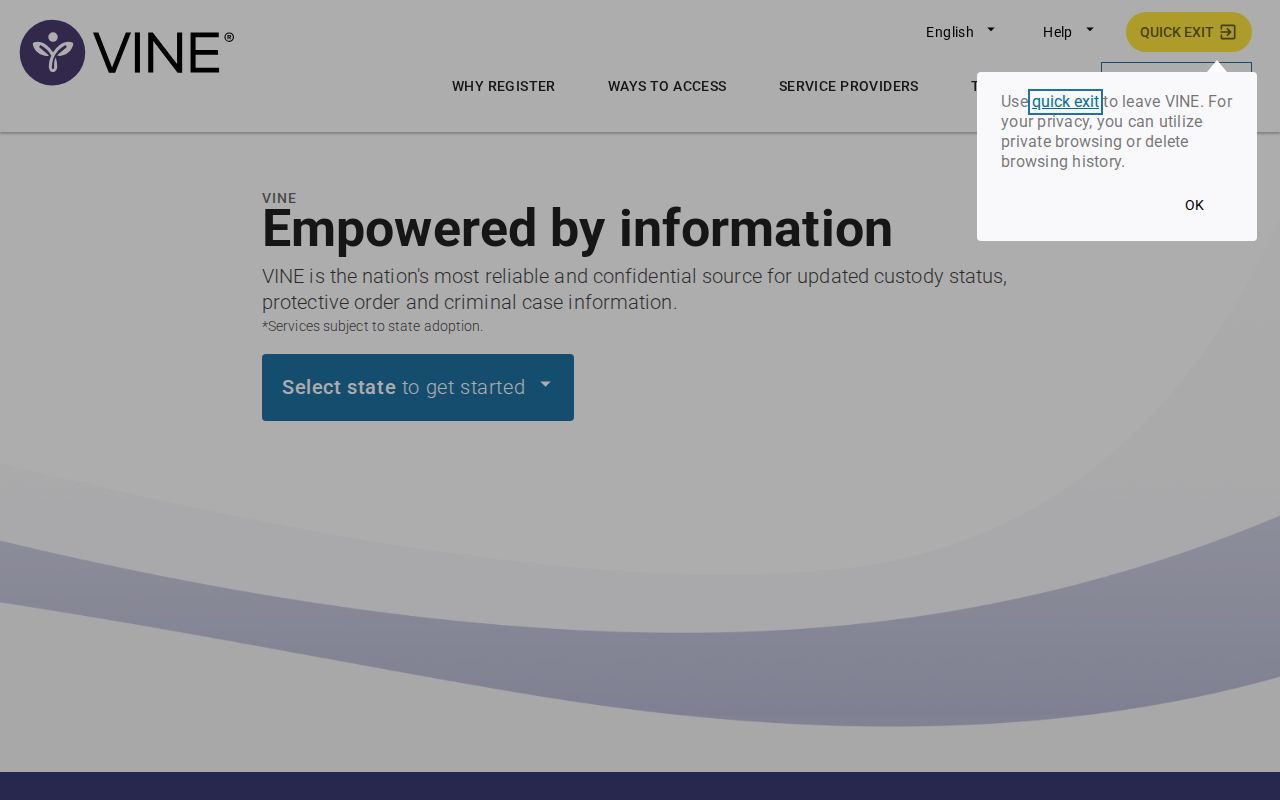
The captured interface shows why the state, person, and chosen delivery method must all be checked before registration is saved.
Lincoln County Release Results
Kentucky guidance draws a useful line between current and past custody. An in-custody match gives the reporting facility, address, and phone. A not-in-custody match gives a release date. Labels can change with the vendor interface, so look for the meaning rather than one promised button or phrase. The result is a lead, not a certified release record.
| Field | What it establishes |
|---|---|
| Name or ID | Links the result to a specific person. |
| Custody status | Shows whether the reporting agency lists current custody. |
| Facility and contact | Identifies where an in-custody person is reported. |
| Event type | Distinguishes release, transfer, escape, or another change. |
| Release date | Corroborates departure from the reporting custody. |
Not in custody plus a date supports release from that reporting jail or institution. It does not rule out a new booking, another county hold, federal custody, or immigration custody. A new facility or transfer notice means custody continued elsewhere. For a DOC-managed person, compare the result with KOOL and the dated Daily Releases archive. For a local bond-out, compare it with the jail transaction and court order.
Register Lincoln County Release Alerts
Registration begins from the correct person’s record. Offered delivery methods can include phone, email, text, TTY, or an in-app notice. Choices vary by event and interface. Registration is anonymous. A personal phone number is better than a switchboard-only number because the recipient must hear and acknowledge the call.
- Open the verified offender record.
- Choose registration or notification.
- Select each offered delivery channel you can monitor.
- Create a four-digit PIN for telephone alerts.
- Save and confirm the registration.
- Enter the PIN when a call arrives.
- Update the contact data if it changes.
Jail-release calls may repeat every 30 minutes over a 24-hour period until someone enters the PIN. Calls can arrive at any hour. For a planned release from a state institution, Kentucky attempts notice about 72 hours in advance when possible. A sudden court order, immediately applied credit, parole timing, or escape can prevent advance notice. Keep the PIN where the intended recipient can reach it.
Note: Acknowledging a call stops repeats, but it does not certify the release or explain a person’s next legal status.
Verify Lincoln County Release Alerts
VINE depends on agency data and vendor delivery. It can lag. More importantly, a February 2026 vendor failure sent false Kentucky release alerts before service was restored. That event makes a two-source check essential in Lincoln County. Keep the alert’s event type, date, name, and ID, then contact the agency or open the matching official state record.
For Lincoln County Regional Jail, call 606-365-4580 and ask whether the booking record shows actual release, transfer, date, and authority. For a KY DOC person, use KOOL and the Daily Releases archive. Read status and location together. A community-supervision entry can mean physical release with ongoing legal control, while an institution or county-jail location means confinement continued.
Federal cases sit outside VINE’s core county and state route. The BOP locator can show a past release date and “RELEASED” as location, but that only ends BOP custody. ICE has a separate detainee locator with a short post-release window. Neither system turns a VINE no-result into proof of release.
Lincoln County Two-Source Check
Kentucky’s automated notification layer has deep statewide reach, yet the 2026 false-alert incident exposed the difference between a fast notice and a final record. Lincoln County has an added reason for care: the jail’s old current-inmate frameset is broken and cannot serve as a dependable second check. The sound sequence is VINE first for speed, then the originating record for proof.
A local release should be paired with the jail transaction or Lincoln court order. A DOC release should be paired with KOOL or a dated Daily Releases row that lists the DOC number, release type, and releasing facility. If the alert says transfer, locate the receiving agency rather than calling the person released. Each check answers a different question, and together they prevent a feed error from becoming a false conclusion.
Note: The broken Lincoln roster neither confirms custody nor disproves release, so use person-specific records and agency contacts instead.
Lincoln County VINE Alert Timing
Alert timing depends on the event. A planned state-institution release may support advance notice, but a county release can follow a court order with little warning. Credit applied at once, parole processing, or an escape can also shorten or remove the lead time. Kentucky therefore warns that notice is a service, not a guarantee.
Keep registration active until the event is confirmed. If a call repeats, enter the saved four-digit PIN rather than ignoring it. Then note whether the message says release, transfer, or another custody change. That exact term determines the next call. A transfer requires the receiving facility. A release requires the former custodian's exit record and, where relevant, the court or DOC authority.
Family contact and personal planning may depend on prompt facts, but the automated message cannot say whether a new hold exists. Ask the jail whether the person physically left, and ask where the record says the person went. For a state offender, review the release type because parole, mandatory reentry supervision, shock probation, and minimum-expiration discharge have different meanings.
Match Lincoln County VINE Records
A specific-person search is only useful when the result belongs to the intended person. Start with the full legal name, but do not stop there. Compare the jail or DOC identification number, reported facility, and any other identity detail shown. A common name can return several Kentucky records, including people held far from Lincoln County. Opening the wrong profile can lead to an alert for an unrelated custody event.
If the first search returns nothing, remove optional fields and try a shorter form of the name. Kentucky DOC guidance for KOOL follows the same sound principle: one wrong criterion can hide the correct match. A jail nickname, changed surname, or spelling difference may also affect results. When a jail or DOC number is known, it is usually the strongest search value because it is tied to one correctional record.
Keep the identifiers from the matching VINE record for the confirmation step. Lincoln County Regional Jail staff can use a name, booking period, and booking number to locate the local transaction. Kentucky DOC records use the offender number. The Lincoln court file uses its own case number. Recording which number belongs to which system prevents a court case, jail booking, and DOC sentence from being blended into one unsupported timeline.
Read Lincoln County VINE Events
Event wording controls the conclusion. A release event means the reporting custodian says its custody ended. A transfer means the person moved to another facility or authority and remained held. An escape is an unlawful departure, not a release. An upcoming parole-hearing notice reports a proceeding, not a decision or physical exit. Each event needs a different second source.
For a local release, request the Lincoln jail transaction and compare it with the court authority. For a transfer, ask for the receiving agency and then use that agency’s locator. For a DOC-managed release, inspect KOOL and the dated Daily Releases PDF. The state report can show DOC number, release type, releasing facility, and felony class. A row that names a county jail can confirm a state-managed event from that jail, but it does not cover every local bond-out or misdemeanor release.
A not-in-custody result with a release date corroborates departure from the reporting system. It does not exclude a later arrest, another county hold, federal custody, or immigration custody. That boundary matters in Lincoln County because VINE spans Kentucky county and state systems but does not replace the federal BOP locator or ICE detainee locator. Follow the destination, not just the word “release.”
Lincoln County VINE Fallbacks
When VINE does not return a usable match, follow the custody type rather than repeating the same search. For a Lincoln County Regional Jail stay, call 606-365-4580 and request the booking or release transaction. Give a full name, approximate booking period, and known booking number. Ask whether the person was released or transferred, the actual event time, the legal authority, and the destination. That focused request seeks an existing record instead of asking staff to create a new report.
For a Kentucky DOC sentence, search KOOL by offender number or a minimally restricted name. Open the matching profile and read status, location, supervision, sentence, and date labels together. Then inspect the DOC Daily Releases archive near the expected date. Its PDFs contain the DOC number, name, type of release, releasing facility, and highest felony class. A county jail can appear in the releasing-facility field when DOC managed the person there.
The Lincoln Circuit Court Clerk’s file is the route for the order behind bond, dismissal, probation, shock probation, sentence completion, or another release. A signed order establishes legal authority, but the jail record establishes when processing ended. If another agency placed a hold, the person may move directly into new custody even though the Lincoln stay closed. Ask for the receiving agency before concluding that the person returned to the community.
Federal custody needs the Bureau of Prisons locator. A past date with “RELEASED” means BOP custody ended as of that date, but another sovereign may still hold the person. ICE’s locator focuses on current detainees and a limited period after release. The U.S. Marshals Service has no comparable public historical release locator. These systems explain why a Kentucky VINE no-result cannot settle a federal or immigration question.
Data age matters throughout the fallback chain. KOOL updates during the day but warns that recent material may not be final. VINE relies on participating-agency feeds. Court records can show later orders, and jail records can receive corrections. Save the date of each search, match identifiers across sources, and state only what the checked record actually proves.